
Birch Bark Teachings Workshop
Storytelling – Animal Spirit Teachings and Birch Bark
Students are introduced to an animal teacher and spirit guide, such as:
Through storytelling and discussion, students explore how each animal teaches reflection, responsibility, and connection.
Birch bark teachings are then shared, helping students understand the deep relationship between animals, trees, and people.
Students learn that birch bark has a long history in Indigenous cultures and has been used for:
• Shelters
• Canoes
• Containers
• Art and storytelling
Birch is taught as a tree that is resilient, protective, and versatile, mirroring the lessons shared by the animal spirits.
Traditional medicines connected to birch are introduced in age-appropriate ways, including:
• Sap used for healing
• Inner bark used for soothing
• Bark oils used for protection
Students are invited to reflect with prompts such as:
“What does this tree teach us about care, resilience, and giving back?”
After this portion, students understand the relationship between animal spirits, trees, Indigenous knowledge, and respect for nature.
Land-Based Learning (Optional Component)
When space and weather allow, an optional outdoor learning moment is included.
Students may:
• Locate birch trees and observe bark patterns
• Gently smell or touch bark and notice texture
• Look for sap or signs of seasonal change
• Observe animal signs or patterns in the surrounding environment
Discussions connect animal and tree teachings, highlighting interdependence, sustainability, and traditional knowledge.
This outdoor component helps students see that learning exists beyond the classroom and lives within the land itself.
Curriculum Integration
Kindergarten to Grade 2
- Animal recognition and storytelling
- Shapes, textures, and sensory exploration
- Listening and creative expression
Grades 3 to 5
- Animal habitats and ecosystems
- Traditional plant uses and medicine
- Cultural stories and environmental awareness
Grades 6 to 8
- Indigenous knowledge systems
- Environmental science and stewardship
- Cultural history and responsibility to land
Art Methodology – Birch Bark Painting
The Art Project
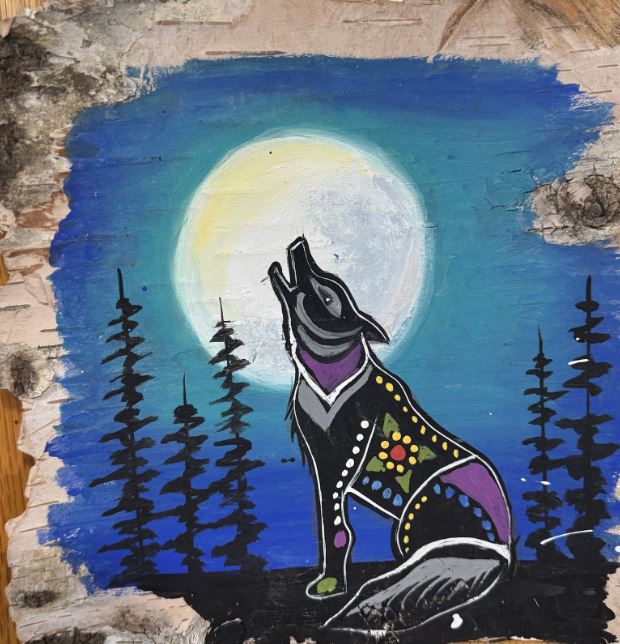
Students paint an animal on a natural piece of birch bark, using the texture of the bark as part of the artwork.
The process includes:
• Lightly sketching the animal if needed
• Painting with acrylics or natural pigments
• Adding symbolic patterns connected to animal and medicine teachings
Symbol examples may include:
• Bear – earthy tones and grounding lines
• Cardinal – red, song lines, joyful marks
• Hummingbird – bright colours, motion lines, flowers
Students may also add seasonal or landscape elements.
Throughout the process, the history of birch bark is shared, helping students understand how their artwork connects to cultural practices such as shelter-building, containers, and art.
A Mindful Creative Practice
Workshop Flow
A typical workshop follows this rhythm:
- Grounding circle with breath and reflection on animal and tree teachings
- Storytelling focused on animal lessons, birch bark history, and medicine
- Optional outdoor observation and connection to land
- Birch bark painting session
- Closing circle where students share one lesson learned
Logistics and Booking Details
Length: 2.5 hours
Cost: $500 per workshop
Materials fee: $10 per student
All materials are included.
This workshop combines story, land, art, and traditional knowledge to teach respect for animals, birch trees, and Indigenous medicines in an age-appropriate and engaging way.