Medicine Wheel Teachings Workshop
This workshop creates a safe, inclusive space where students learn about Indigenous medicines without fear or stigma, and with curiosity, openness, and respect.
Storytelling and Medicine Wheel Teachings
Students are introduced to:
Short, age-appropriate oral stories are shared to explain each medicine:
Sage
Sage is taught as a medicine of cleansing and letting go. Students learn how Sage is connected to clearing thoughts and making space for calm.
Sweetgrass
Sweetgrass is shared as a teaching of kindness, love, and bringing in the good. Students learn about care, gentleness, and positive intention.
Cedar
Cedar is taught as a medicine of protection and grounding. Students explore how Cedar supports strength, safety, and connection.
Tobacco
Tobacco is introduced as a medicine of gratitude, offering, and intention. Students learn that it is used respectfully to give thanks and show appreciation.
Throughout the storytelling, balance is emphasized across emotional, mental, physical, and spiritual aspects of life.
After this portion, students often feel curious, calm, and more aware of balance and wellbeing.
Land-Based Learning (Optional Component)
When space and weather allow, students are guided outside for a short land-based learning experience.
Activities may include:
• Finding natural “wheel” patterns in the environment, such as the sun, horizon, or trees
• Noticing the direction of the wind and how it feels
• Identifying local plant relatives such as cedar or pine
• Learning the teaching of reciprocity, including respect and gratitude for the land
Students are taught that we take nothing without offering respect.
This experience helps students feel connected to directions, land, and plant relatives.
Curriculum Integration
Kindergarten to Grade 2
• Colours and shapes
• Identity and belonging
• Storytelling and listening
Grades 3 to 5
• Habitats and plant uses
• Cultural teachings
• Mapping directions and symbols
Grades 6 to 8
• Indigenous science and knowledge systems
• Health and wellness models
• Symbolism and worldview
Art Methodology – Circle Canvas Medicine Wheel
The Art Project
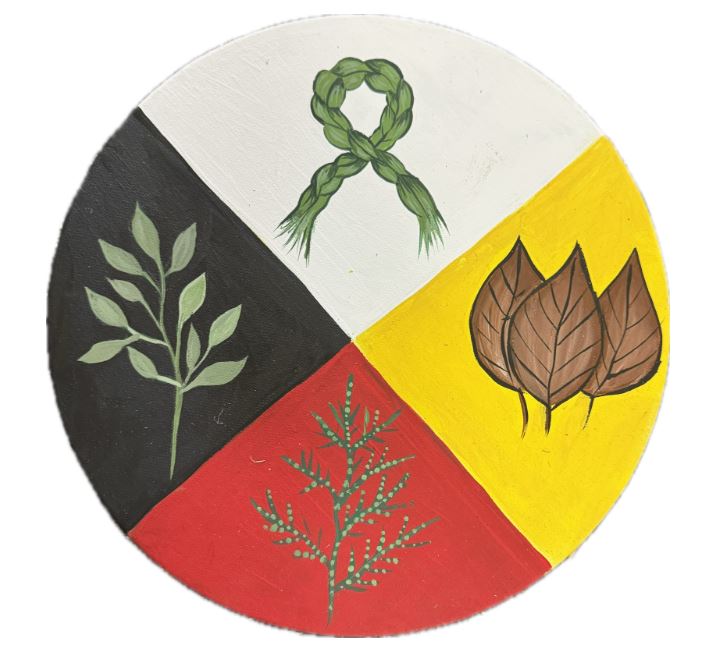
Students create a Medicine Wheel painting on a circular canvas.
Each student receives a round canvas, symbolizing cycles, unity, and balance.
The art process includes:
• Dividing the circle into four quadrants
• Painting the four directional colours: yellow, red, black, and white
• Adding symbols for each medicine, such as:
– Sage leaves
– Sweetgrass braid patterns
– Cedar branches
– Tobacco plant or offering pouch
Students are encouraged to include personal symbols that represent balance in their own lives.
Optional textured elements may be added using cotton, thread, or natural materials.
A Calm and Meditative Creative Process
Painting is guided slowly and intentionally, helping students feel grounded and focused.
The circular canvas reinforces Medicine Wheel teachings, and the finished artwork becomes a meaningful cultural learning piece for the classroom.
After the art session, students often feel proud, calm, and connected to what they have learned.
Workshop Flow
A typical workshop follows this rhythm:
• Opening with smudge or grounding breath, depending on school guidelines
• Storytelling and teachings of the Four Medicines
• Short outdoor land observation
• Quiet art session using circular canvases
• Closing circle where students share which medicine they connected with most
Logistics and Booking Details
Length: 2.5 hours
Cost: $500 per workshop
Materials fee: $10 per student
All materials included.
This workshop offers balanced, meaningful, and culturally respectful learning rooted in story, land, art, and Medicine Wheel teachings.
Travel and accommodations are additional and discussed during booking.